The Ocean Made Me Salty
A Designer’s First Look: Lighthearted, Clean, and Ready for Stitching
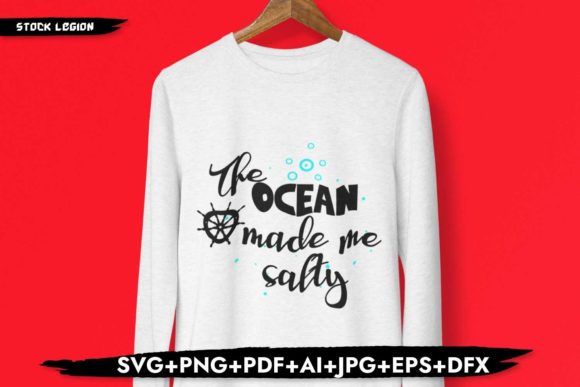
When I opened The Ocean Made Me Salty for the first time, I wasn’t looking for a trend-chasing quote—I was checking whether it would hold up as a real embroidery file in my next client project. It did. The design carries that effortless coastal charm without veering into cliché: relaxed lettering, subtle wave-inspired spacing, and just enough visual rhythm to feel intentional—not auto-generated. As a machine embroidery designer who tests dozens of graphics weekly, I appreciate how cleanly the lines translate from screen to stitch. This isn’t an overworked script or a dense decorative motif—it’s a confident, mid-weight phrase built for readability at 3–4 inches tall, which makes it ideal for tote bags, sweatshirts, and kitchen towels.
Real-World Use: From Beachy Tote to Boutique Baby Onesie
Last week, I used The Ocean Made Me Salty on a natural canvas tote for a local surf shop’s summer launch. Paired with a soft navy thread on unbleached fabric, it stitched smoothly—no skipped stitches, no thread breaks, and zero distortion in the curves of the “S” and “y.” I also tested it on a lightweight cotton baby onesie (size 6–12 months), using a tear-away stabilizer and reduced top tension. It held beautifully—no puckering, no shadowing—and the phrase read clearly even at 2.5 inches wide. That versatility matters: this design works across Crafts categories without needing heavy adaptation. Whether you’re an Etsy seller prepping holiday embroidery kits or a small shop owner branding aprons for a seaside café, The Ocean Made Me Salty lands with warmth and authenticity—not forced quirk.
Where It Shines (and Where to Pause)
The Ocean Made Me Salty excels on stable, medium-weight fabrics: cotton twill, denim, linen blends, and structured knits. It’s a strong candidate for embroidered patches, sweatshirt embroidery, and tea towel designs where clarity and wearability are priorities. On curved surfaces like caps? It holds up well if centered properly—just avoid stretching the front panel too tightly in the hoop. For personalized gifts or nursery decor, its clean layout reads instantly, reinforcing that handmade product feeling customers pay for.
That said, proceed with care on stretchy fabric (think lightweight jersey tees) unless you use cut-away stabilizer and reduce stitch density manually. Tiny hoop sizes (under 4×4) will compress detail—especially the fine terminals of letters—so test before committing to baby caps or wristband-style items. Dark fabric demands high-contrast thread; light gray or oatmeal thread can disappear on charcoal or navy unless you add an underlay or outline stitch. And while the design avoids ultra-thin lines, the lowercase “a” and “e” have tight counters—if stitching on textured fabric like terry cloth or bouclé, those inner spaces may fill in slightly. Always check your finished product against both light and dark fabric mockups.
Design Assets That Build Trust—Not Just Aesthetics
What separates The Ocean Made Me Salty from generic quote graphics is how thoughtfully it balances personality with practicality. As a digital embroidery file, it’s not overloaded with decorative elements that eat up stitch count or complicate color changes. That means faster hooping, cleaner finishes, and fewer customer returns due to messy execution. For craft business owners, that translates directly to brand consistency and buyer engagement: when your Etsy listing shows crisp, confident stitching—and the real item matches—it builds trust. When your holiday embroidery gift arrives with legible, well-spaced lettering and no stray threads, it feels professionally made—not DIY-adjacent.
I’ve seen too many “fun” quotes fail at scale because they prioritize whimsy over stitch logic. The Ocean Made Me Salty doesn’t do that. Its spacing allows breathing room between letters, its weight supports satin-stitch outlines without bleeding, and its simplicity invites customization—swap thread colors to match coastal palettes (seafoam, sand, deep teal) or go monochrome for modern appeal.
Practical Notes Every Embroidery Designer Should Run Through
- Test The Ocean Made Me Salty on scrap fabric matching your final project’s weight and weave—especially if using textured or dark fabric.
- Check thread color contrast early: what reads boldly on screen may fade on navy or heather gray.
- Review stitch density visually—if your machine allows preview mode, look for areas where fill stitches might crowd narrow letterforms.
- Confirm hoop size compatibility: the included 6×6 dimensions suggest flexibility, but always verify before digitizing for smaller formats.
- Inspect small details like dot accents or serif terminals—they’re often the first to vanish on low-resolution machines or thin stabilizers.
- Use proper stabilizer: tear-away for stable wovens, cut-away for knits, and water-soluble for delicate layers like lace overlays.
- Verify licensing terms before selling finished products or bundling The Ocean Made Me Salty into digital embroidery kits—this is essential for commercial embroidery and Etsy sellers.
- Try black-and-white mockups: they reveal hierarchy, spacing issues, and unintended visual noise better than color previews.
Final Thought: A Quietly Confident Design Asset
The Ocean Made Me Salty isn’t shouting for attention—it’s the kind of Graphics asset that earns repeat use because it simply works. It fits naturally into coastal-themed collections, but also holds its own in minimalist apparel lines or boutique home goods. As a designer who evaluates hundreds of embroidery files a year, I don’t keep many long-term—but this one’s in my active folder. It’s reliable for custom apparel, thoughtful for personalized gifts, and professional enough for small shop merchandise. If you’re curating design assets for your craft business—or just choosing your next embroidered patch—you’ll find The Ocean Made Me Salty delivers more than charm. It delivers clarity, confidence, and quiet craftsmanship.