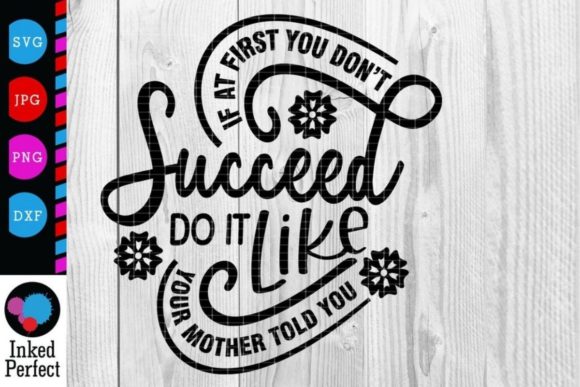
If at First You Don’t Succeed Do It Like Your Mother Told You Graphics
As a brand designer and content marketer, I’ve seen countless graphic design assets come and go. But few have the unique blend of personality and practicality that If at First You Don’t Succeed Do It Like Your Mother Told You offers. This creative design is more than just a catchy phrase—it’s a visual conversation starter that can elevate your marketing efforts, especially when working with crafts and graphics.
The First Impression: A Warm, Relatable Visual Tone
When you first lay eyes on If at First You Don’t Succeed Do It Like Your Mother Told You, it immediately evokes a sense of nostalgia and humor. The design carries a casual yet polished vibe that feels approachable. It’s perfect for brands targeting a lifestyle audience or those looking to infuse a bit of personality into their visuals. Whether you’re designing for handmade products, social media graphics, or editorial content, this asset brings a friendly tone that can resonate with a wide range of consumers.
The emotional tone is light-hearted but not frivolous. It suggests perseverance and a touch of wit—qualities that can help build an emotional connection with your audience. For small business branding, this kind of visual can be a powerful tool in making your message feel more human and relatable.
Real-World Marketing Applications
In real marketing situations, If at First You Don’t Succeed Do It Like Your Mother Told You proves to be a versatile graphic design asset. It can be used across multiple platforms, from social media posts to email banners and even print materials. Its adaptability makes it ideal for content creators who need consistent branding across different channels.
For instance, if you're launching a new product or promoting a seasonal offer, this design can serve as a strong campaign header or hero graphic. It also works well as part of a design bundle, offering value to users who want to add personality to their digital product or printable design projects.
When paired with a clean layout, this asset can enhance visual hierarchy without overwhelming the viewer. It supports modern design trends while maintaining a classic feel that appeals to both traditional and contemporary audiences.
Supporting Key Marketing Goals
This design asset directly contributes to several core marketing goals. It helps create a stronger first impression by adding a memorable visual element to your campaigns. When used strategically, it can improve audience trust by reinforcing a brand’s personality and values.
It also plays a role in building stronger recognition. With its unique message and visual style, If at First You Don’t Succeed Do It Like Your Mother Told You can become a signature element in your brand identity. It’s particularly effective in content marketing, where consistency and clarity are essential for engagement.
Moreover, this design can boost engagement by making your marketing visuals more shareable. Whether it's used in social media graphics, blog headers, or email campaigns, it adds a layer of personality that can make your content stand out.
Best Use Cases for Maximum Impact
If at First You Don’t Succeed Do It Like Your Mother Told You shines in scenarios where visual storytelling is key. It works well as a hero graphic for product launches, a campaign header for seasonal promotions, or a branded template for content kits. It can also serve as a decorative brand element in editorial layouts or as part of a design bundle for creative marketplaces.
For small business branding, this asset is ideal for packaging accents, event flyers, and promotional banners. It adds a touch of charm without sacrificing professionalism, making it suitable for both handmade products and commercial design projects.
When integrated into a Canva template or a digital ad, it enhances the overall aesthetic while keeping the focus on the main message. It’s a great addition to any design toolkit, especially for those working on content marketing or visual content creation.
Where to Use It Carefully
While If at First You Don’t Succeed Do It Like Your Mother Told You is highly adaptable, there are certain contexts where it may not be the best fit. In formal corporate branding, for example, its casual tone could clash with the desired level of professionalism. Similarly, in dense information layouts or small mobile graphics, the design might become distracting rather than helpful.
It’s also important to consider how it pairs with other design elements. If your brand uses a minimal or low-contrast aesthetic, this asset may not integrate seamlessly. Likewise, in text-heavy ads or designs where the main message needs to take precedence, it should be used sparingly.
Before incorporating it into paid campaigns or client work, always verify the commercial license to ensure it meets your legal requirements.
Practical Designer Notes
As a brand designer, I recommend testing If at First You Don’t Succeed Do It Like Your Mother Told You with your brand color palette. Ensure it looks good in black and white and that it maintains readability in small sizes. Preview it on mobile screens to confirm it doesn’t get lost in the composition.
Consider how it interacts with different font styles. Whether paired with a serif, sans serif, script, or display font, it should maintain balance and visual harmony. Check spacing and alignment to ensure it doesn’t disrupt the overall design flow.
Finally, compare it against competitor visuals to see how it stands out in the market. This will help you determine whether it aligns with your brand’s voice and goals.
Conclusion: A Versatile Asset for Creative Entrepreneurs
If at First You Don’t Succeed Do It Like Your Mother Told You is more than just a graphic design asset—it’s a tool that can enhance your marketing strategy, build audience trust, and add personality to your brand. Whether you're a small business owner, a digital seller, or a creative entrepreneur, this design offers a unique way to connect with your audience through visual storytelling.
With careful consideration and strategic placement, it can become a valuable addition to your design arsenal. From social media graphics to packaging inserts, it has the potential to elevate your marketing efforts and make your brand more memorable.